People Counting
TSA-integrated passenger counters at entrances, exits, security, gates, restrooms, and concessions. Anonymous-by-design — presence and dwell, never identity.
60 days from kickoff to live operating data. 14 production capabilities. One wireless layer. Live at Jacksonville, Pittsburgh, Miami-Dade, and Fort Lauderdale.
Every capability below is in production at a real airport today — Jacksonville, Pittsburgh, Miami-Dade, Fort Lauderdale, or a Senzary reference design. No vapor. No “coming soon.” Drop sensors, light up a tenant on IoTLogIQ, and operations sees data within 60 days.
TSA-integrated passenger counters at entrances, exits, security, gates, restrooms, and concessions. Anonymous-by-design — presence and dwell, never identity.
Conveyor vibration, motor health, door status, jam detection across the BHS. Wireless retrofits on existing belts — no rewiring required.
Position, movement, alignment, and operational telemetry on every jet bridge. Reduces turnaround variance and unplanned outages.
CO₂, VOCs, particulate, temperature, humidity, IAQ index across terminals and back-of-house. LEED-certification ready, sub-30-second response.
Open APIs into existing airport stack — OAG flight data, CMMS work orders, BMS, BACnet/Modbus/OPC, badge systems. IoTLogIQ bridges; never replaces.
Odor, ammonia, paper/soap level, occupancy, slip-and-fall detection. Cleaning crews dispatched on actual demand — not on a clipboard schedule.
Occupancy- and daylight-driven lighting in concourses, jet bridges, parking, and back-of-house. Wireless retrofit — pairs with existing fixtures.
Live queue length and dwell at security, customs, check-in, gates. Pattern-of-life model surfaces bottlenecks before passengers feel them.
Charger uptime, utilization, fault states, and load curves. Maximizes ROI on ground-support electrification and curbside EV stalls.
Multi-band sound levels for ramp noise, concourse comfort, and community-noise compliance. Anonymized — no audio recording, just dB metrics.
PM2.5, PM10, NO₂, O₃, ramp emissions at gates, fuel pits, and perimeter. Connects directly to ESG and FAA Part 150 reporting.
Escalators, moving walkways, elevators, doors, gates. Vibration + cycle count + temperature feeds the CMMS for condition-based maintenance.
Wheelchairs, GSE, tugs, push-back tractors, baggage carts, tools, and vehicles. LoRaWAN + BLE + GPS — indoor and outdoor on one map.
Sourcewell Cooperative Contract #041525-SENZ valid through July 2029. LEED-certification-ready data. AIP / IIJA / FAA fund-eligible deployments.
These 14 are the most-requested. The full AirportIQ library spans 60+ use cases across operations, passenger processing, baggage, cargo, security, and back-office.
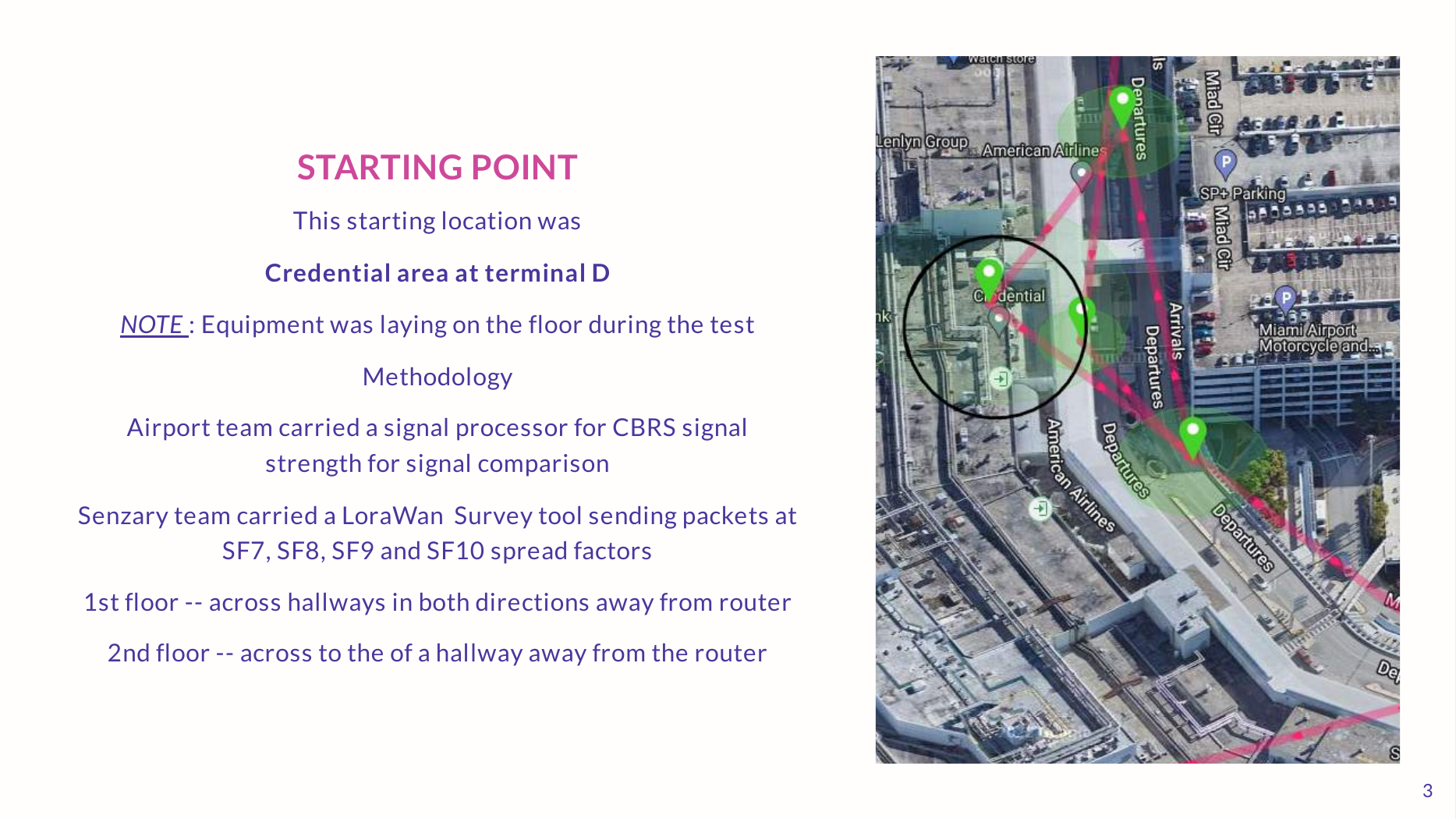
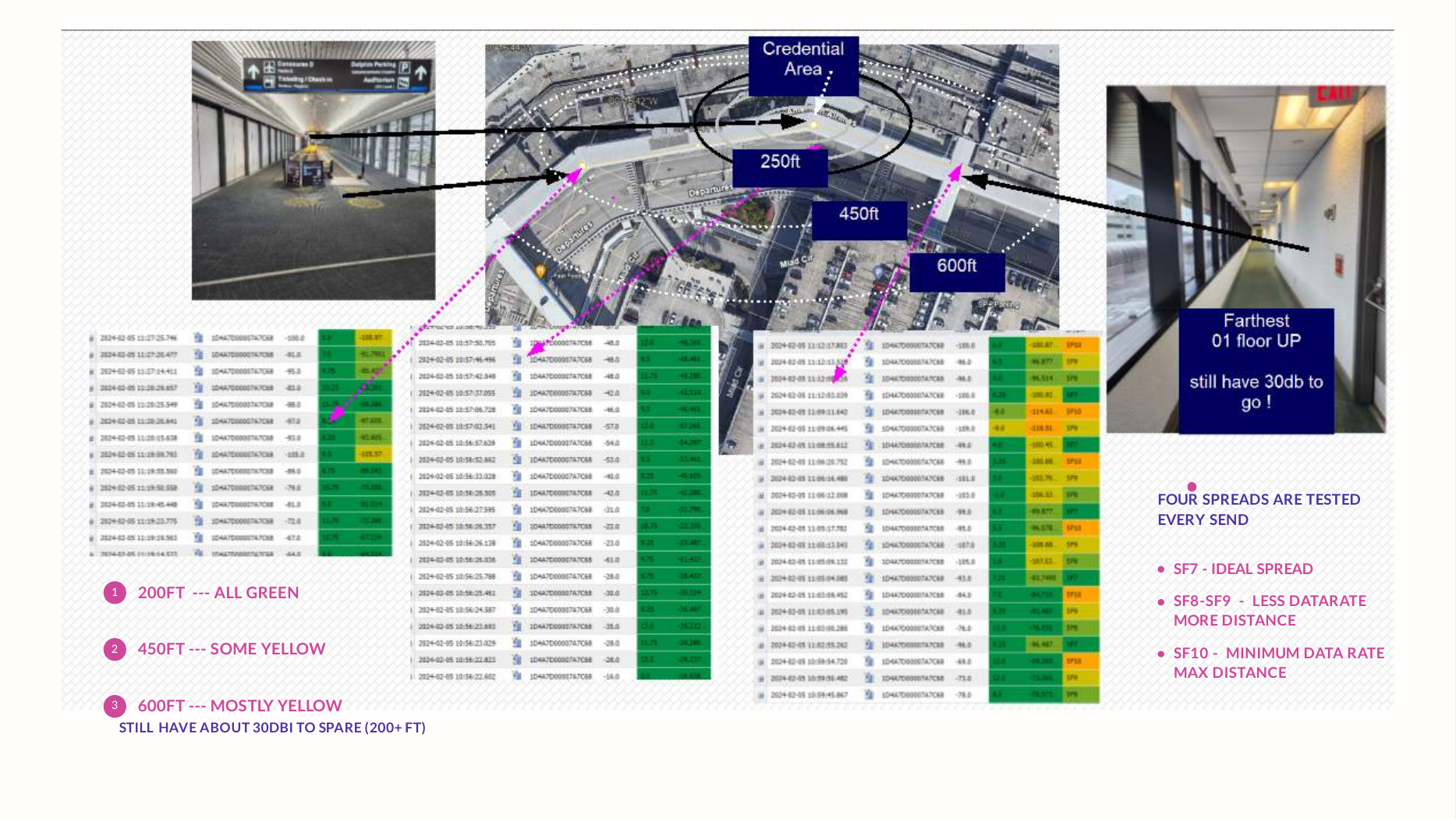
Joint LoRaWAN vs CBRS coverage survey performed at MIA Terminal D on February 5, 2024 — gateway on the credential-area floor, sensors carried horizontally and one floor up, packets sent at SF7, SF8, SF9, and SF10 spread factors. Every reading below is from the live test.
Conducted jointly by Eric Schummer · CEO, Senzary and Ramon Alonso · Network Manager, Blackbox.

Credential area, Terminal D. Equipment laid on the floor — deliberately suboptimal so any improvement from a proper mount would only add range.

Every airport is six interlocking businesses running on shared infrastructure. AirportIQ instruments each pillar with the same wireless layer — so problems, opportunities, and infrastructure line up across them instead of fighting each other.
Disconnected systems, manual rounds, reactive maintenance, opaque energy use.
Real-time situational picture · condition-based maintenance · ESG-ready energy reporting.
LoRaWAN gateways, BMS/BACnet/Modbus bridges, IoTLogIQ middleware.
Unknown queue length, anonymous flow blind spots, restroom complaints, slow dwell signals.
10–30% queue reduction · TSA-aligned counting · cleaner restrooms on demand.
People counters, occupancy sensors, IAQ + odor sensors, queue-length analytics.
Belt failures, motor surprises, jams found only after passengers report missing bags.
Predictive maintenance on conveyors · jam detection · uptime SLAs you can prove.
Vibration + temperature + cycle sensors, door/jam contacts, BHS-side analytics.
GSE hunting, tug & cart utilization unknown, fuel + deicing zones under-instrumented.
Asset utilization metrics · geofence alerts · ATEX-rated coverage where required.
LoRaWAN outdoor + BLE + GPS multi-mode trackers, ATEX-rated variants.
Lone-worker risk, panic-button gaps, restricted-zone enforcement on paper.
SOS with location · sub-contractor access control · slip-and-fall detection.
Badge trackers (SMARTBADGE-class), panic buttons, door contacts, motion sensors.
Manual ESG reporting, sub-metered data trapped in spreadsheets, audit fire-drills.
Auto-generated ESG, LEED-ready evidence, carbon and water in one feed.
Three-phase energy clamps, water meters, sub-metering, IoTLogIQ ESG dashboards.
AirportIQ on IoTLogIQ is the wireless layer modern airports deploy in 60 days, not 6 months. 14 live capabilities — people counting, baggage handling, jet bridges, air quality, restrooms, queue management, EV chargers, asset tracking, ESG — all on one tenant, all open to your existing BMS, BHS, and BACnet stack. In production at Jacksonville, Pittsburgh, Miami-Dade, and Fort Lauderdale.
Most airport operations are still tracked on clipboards, walkie-talkies, and tribal knowledge. Unknown people flows, manual restroom checks, asset hunting, repetitive cleaning rounds, escalator monitoring done by hourly walk-by. The data exists — sensors, badge scans, BMS points — but it lives in 12 systems that don't talk. AirportIQ bridges them on one wireless layer, then surfaces the operating picture the airport actually runs on.
LoRaWAN indoor (70K sqft per gateway) and outdoor (6–10 mile range). Battery-powered wireless sensors on equipment, doors, restrooms, escalators, tarmac GSE. ATEX-rated variants for fuel handling and deicing zones.
IoTLogIQ middleware connects to existing BACnet, Modbus, OPC, SCADA, BMS, CMMS, and OAG flight data. Adds wireless sensors where wired ones can't reach. Doesn't replace existing systems — extends them.
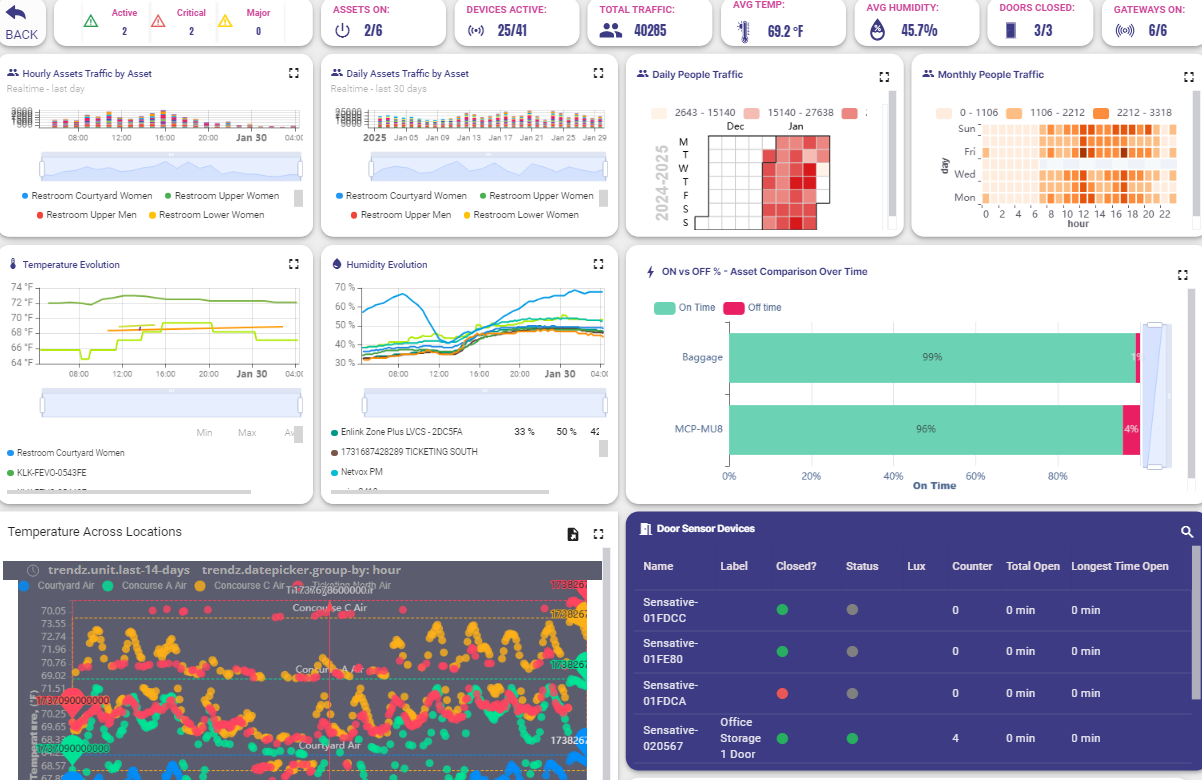
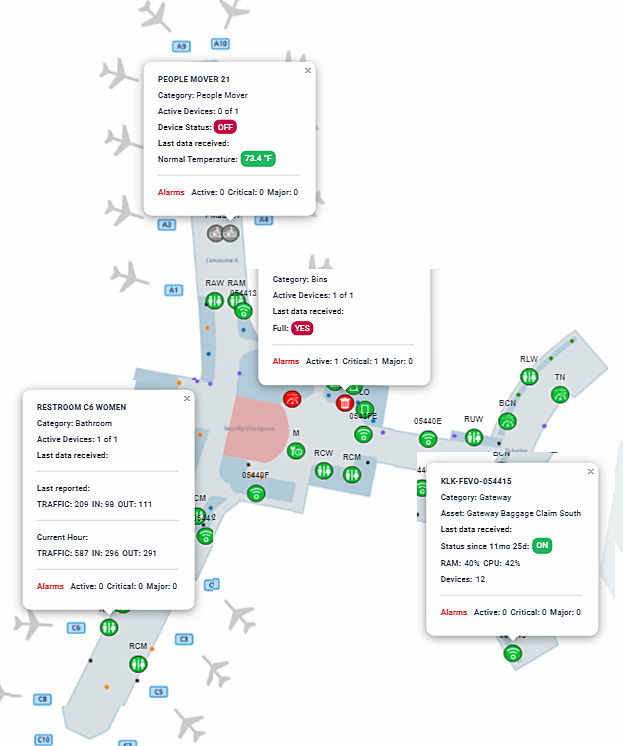
Real-time: occupancy, leak detection, presence, doors, restroom cleaning priority, queue length. Process analytics: people flow, transit times, concession utilization, equipment patterns, ESG reporting.
Automated work orders to maintenance teams. Dynamic signage for parking and queues. Cleaning crews dispatched on actual usage, not schedule. Compliance and ESG reports auto-generated from sensor data.
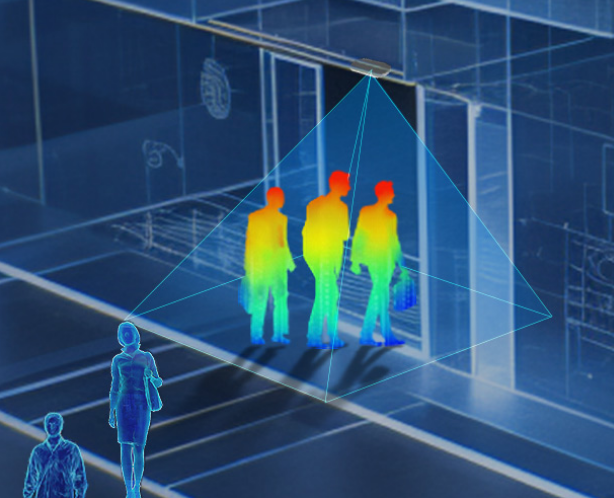
Anonymous, privacy-preserving people counters at entrances, exits, security, gates, restrooms, and concessions. TSA-compatible. Live at JAX with 6M+ counted. Queue dwell analytics drive 10–30% wait-time reduction and 35% service efficiency.
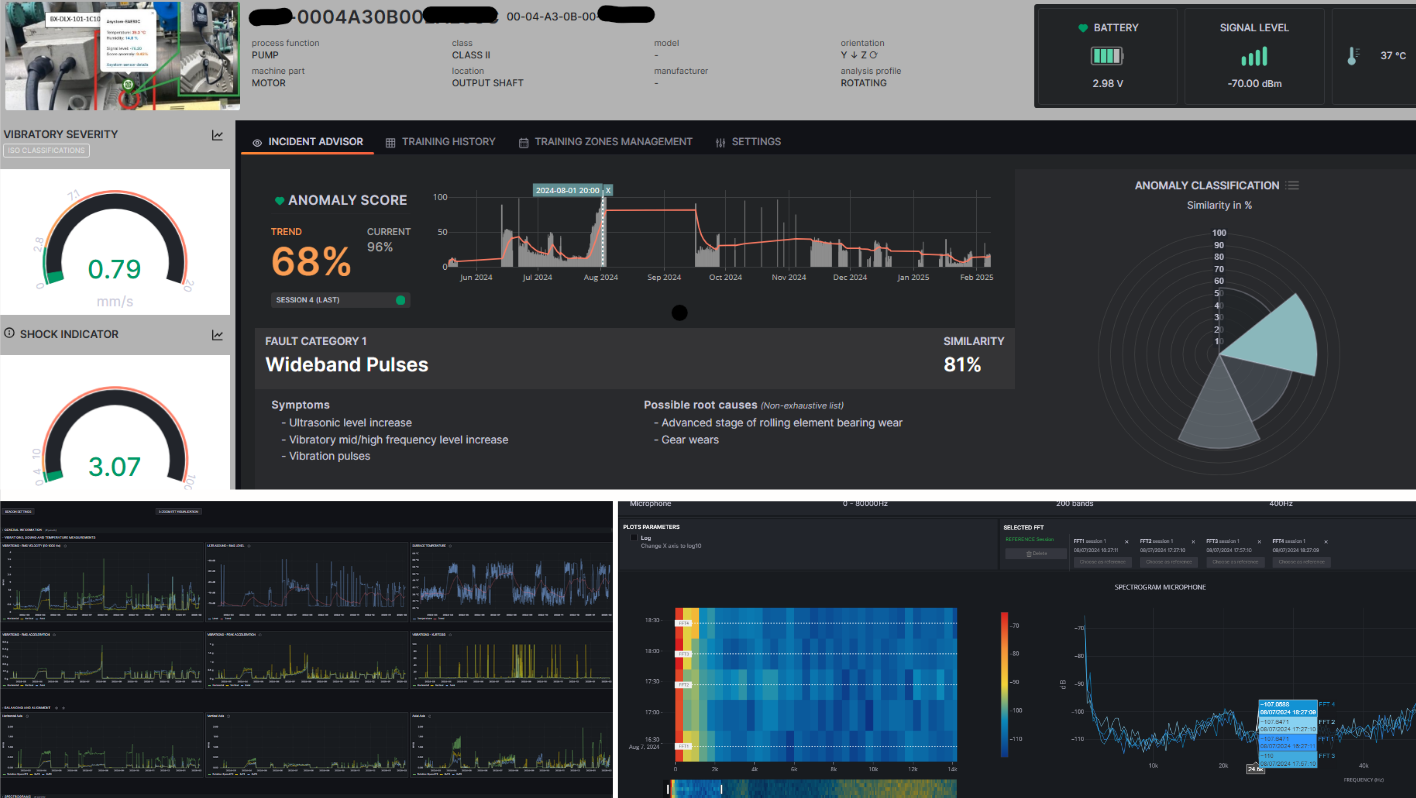
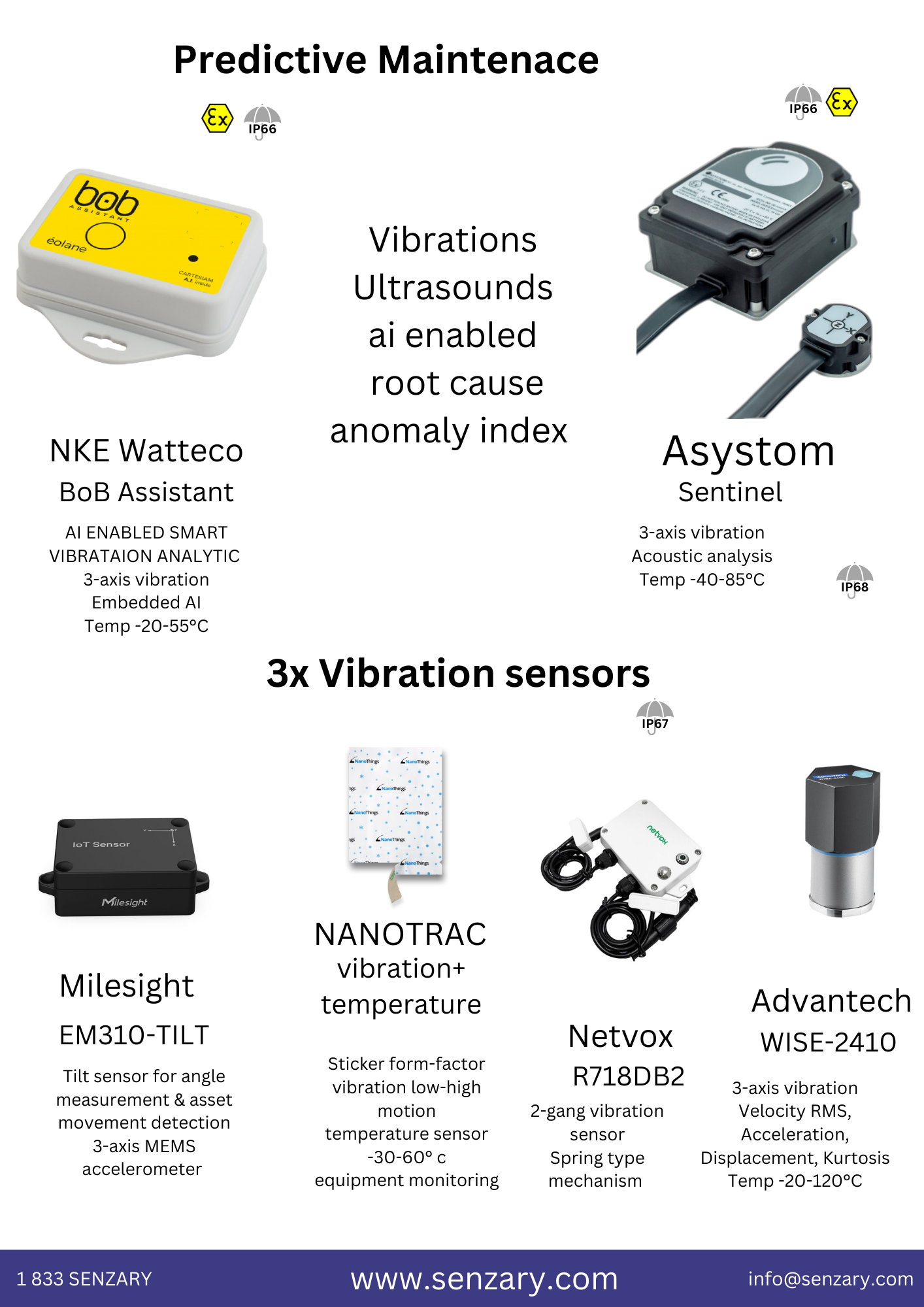
HVAC, pumps, motors, escalators, conveyors, baggage handling. Vibration, ultrasound, temperature, triaxial velocity and acceleration. AI-enabled failure prediction. Automated compliance reporting. Avoid unplanned interruptions; extend asset life.
Tarmac and indoor GSE — plane chargers, golf carts, wheelchairs, baggage carts, tugs, tools. LoRaWAN + BLE + GPS multi-mode. Indoor/outdoor seamless. Geofencing alerts. "Where's the wheelchair?" answered in seconds.
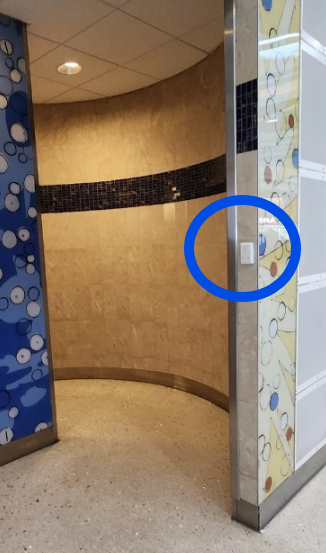
Occupancy, cleanliness, soap and paper levels, faulty-fixture alerts, water and energy consumption. Cleaning crews dispatched on actual demand. Slip-and-fall detection. Resource optimization for water and energy.
Sub-metering, three-phase monitoring, voltage and power factor. Click-on cable clamps — non-intrusive, no cuts. ESG and LEED-ready reporting, carbon management, HVAC optimization. Substations covered with weather + energy sensors.
Sub-contractor access control. Fire-extinguisher "not in place" reporting. Panic buttons with location. Critical-angle detection on cargo equipment. Geofenced restricted-zone alerts. SOS for lone workers. Multi-mode tracking for employees, workers, visitors.
Multi-year deployment. 6M+ people counted. Passenger flow analytics, environmental monitoring, baggage handling integration. Active production deployment — not a pilot.
Reference deployment for terminal operations. Jetway movement, people counters, bathroom optimization, escalator vibration analytics, real-time event management.
Terminal D field survey delivered ZERO packet loss at 600ft with 30dB to spare. Ft. Lauderdale immigration queue design, IoT infrastructure, interactive displays, bathroom counters.
No. AirportIQ is additive. It bridges your existing BACnet/Modbus/OPC building management system with new wireless sensors where wired systems can't reach. IoTLogIQ middleware extends — it doesn't replace. Your BMS stays. Your BHS stays. AirportIQ adds the missing data layer.
Sourcewell Cooperative Contract #041525-SENZ — valid through July 2029. No-bid procurement, pre-negotiated pricing, AIP/IIJA/FAA fund-eligible. Most US airports are eligible Sourcewell members. Federal funds (DHS, EPA) also work for safety and environmental use cases.
Smart people counters detect presence and movement without identifying individuals. No facial recognition, no biometrics, no audio. Counts only. ASHRAE 62.1 and TSA-compatible. Anonymous-by-design — no PII captured.
Yes. Standard deployment is one terminal + one use case (typically restrooms or escalator monitoring) as a 60–90 day pilot. After ROI proof, expand to additional terminals and use cases on the same IoTLogIQ tenant. Land-and-expand model — Clarios scaled from 1 sensor to 5 plants on this same pattern.
LoRaWAN uses sub-GHz license-free bands (US 902–928 MHz) that don't conflict with aviation frequencies. Coexists with WiFi, BLE, and CBRS — we proved it in the Miami Terminal D survey with zero packet loss alongside an active Nokia CBRS network. Site surveys are run before every deployment.
Yes. AirportIQ is multi-tenant — airlines, concessions, ground handlers, and the airport operator each get an isolated view of their own data on the same infrastructure. Monetization opportunities: services to airlines, concessions, passenger services. The same infrastructure powers all of them.
One area. One owner. One problem. Live data on the call, not slides.