

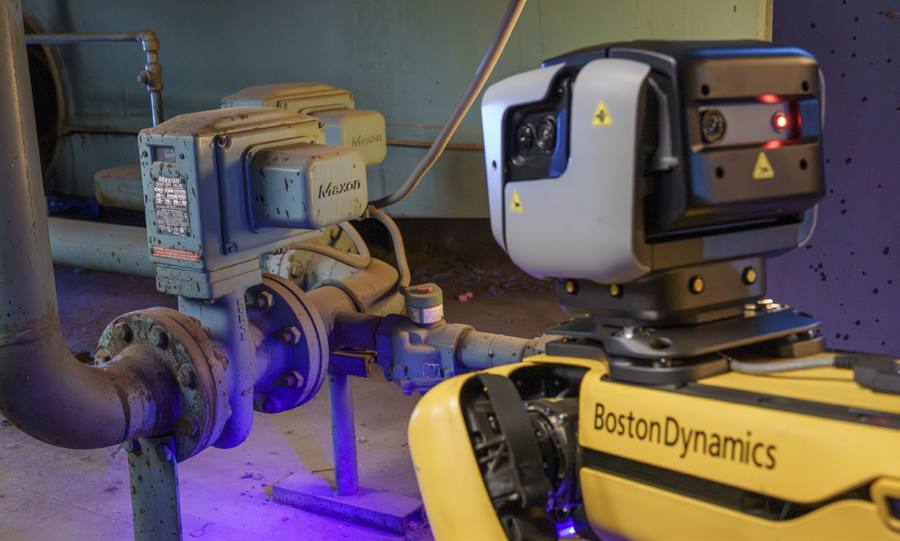
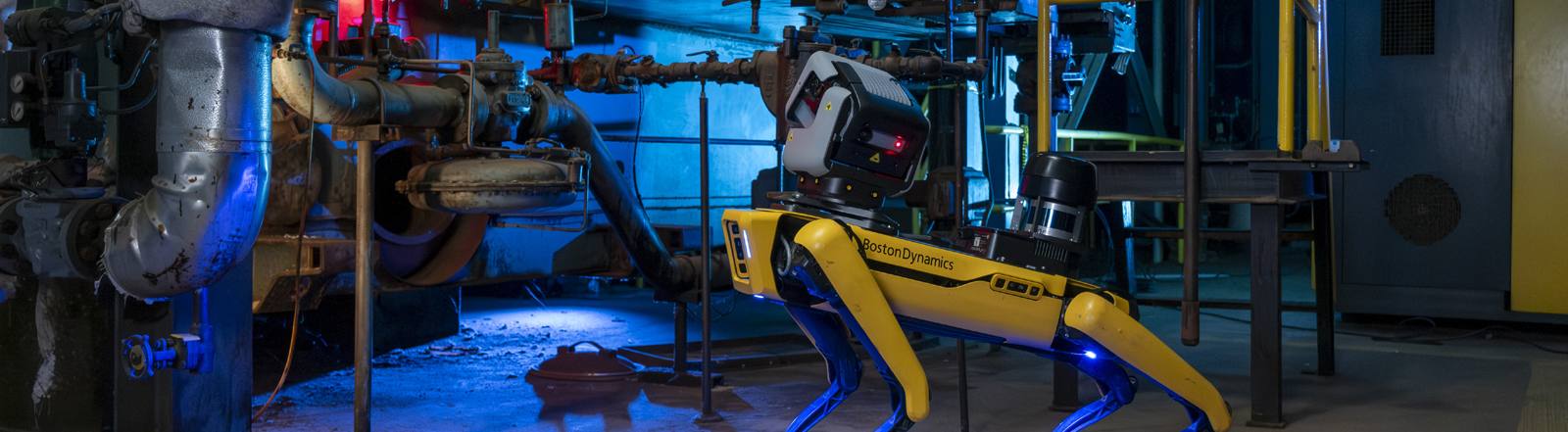
Senzary resells and integrates Boston Dynamics Spot with IoT-LogIQ, so every walk Spot makes is guided by live sensor context and every finding becomes an alarm, a work order and part of the asset record.
Boston Dynamics' own comparison of inspection strategies concludes that most operators combine fixed sensors, manual inspections and mobile robots, each on the use case it serves best. IoT-LogIQ is the layer that ties the three together: fixed wireless sensors report around the clock, Spot collects repeatable readings along its route, and people are sent in only where judgment or repair is needed.
 Fixed · IoT-LogIQ
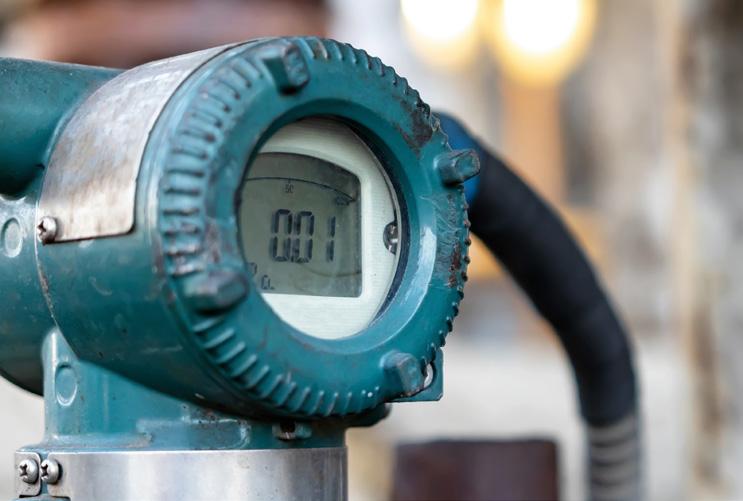
LoRaWAN and wired nodes (analog, digital, serial) on motors, pumps, tanks, doors and gas points report continuously into IoT-LogIQ, organized by company, location, area and asset in Smart Industry.
 Automated · Spot
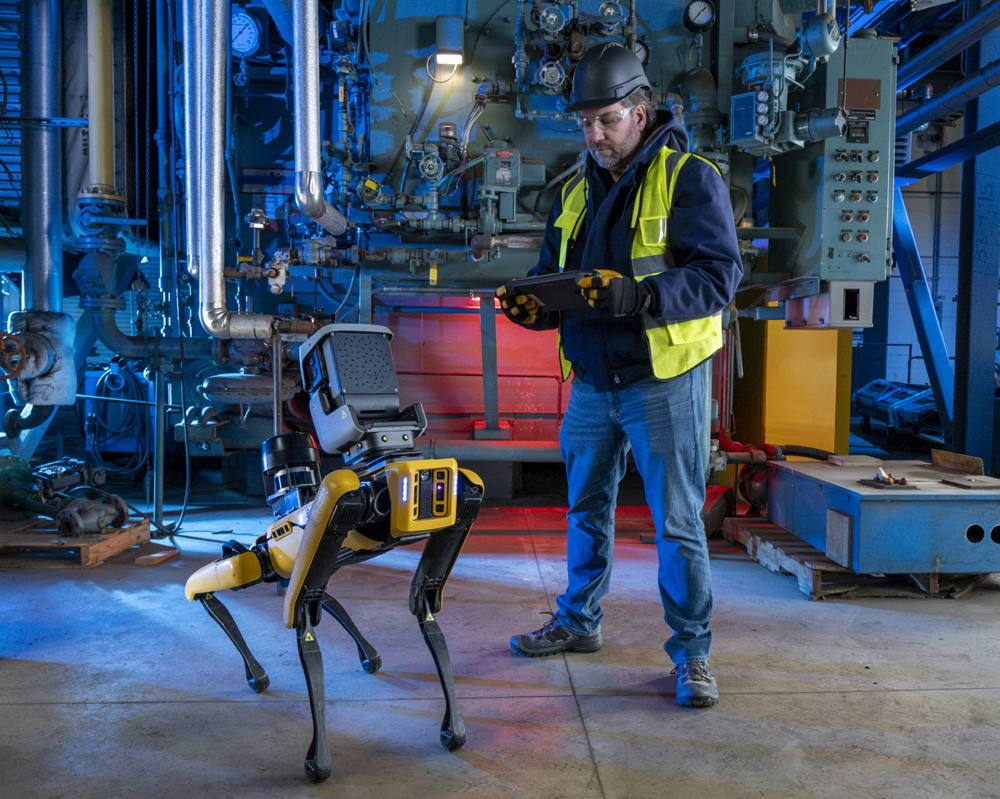
Spot follows the same route and captures from the same positions and angles every time, with thermal, acoustic and visual payloads, and can be rerouted when conditions change.
 Manual · Field teams
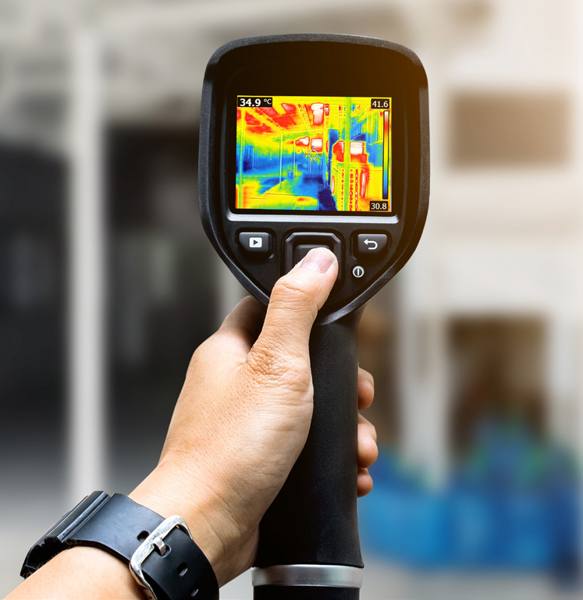
With routine rounds covered by sensors and Spot, skilled staff spend their time on confirmed issues that arrive already located, photographed and trended.
| Outcome | Fixed sensors on IoT-LogIQ | Spot | Together |
|---|---|---|---|
| Data availability | Constant stream from each instrumented point | Repeatable readings across many assets per walk, limited by battery cycles | Continuous coverage on critical points, route coverage on everything between them |
| Accuracy | Same point, same conditions, every reading | Same position and angle on every walk | Spot readings validated against the sensor on the same asset |
| Responsiveness | Detects the change the moment it happens at the instrumented point | Reroutable to new locations and teleoperated for ad hoc checks | A sensor alarm dispatches Spot to the exact asset within minutes |
| Worker impact | Fewer trips into hazardous areas | Keeps people out of heat, pressure, gas and elevation during rounds | People enter an area after Spot has confirmed what is there |
| Cost | Grows with the number of points instrumented | Higher start-up, lower recurring labor | Sensors where continuity pays, Spot for breadth, labor for repair |
Comparison framework: Boston Dynamics, "Manual vs. Fixed vs. Automated Inspections," white paper, Rev 06/26.
Predictive maintenance pays where three costs are large: an unplanned stop, the labor of routine rounds and the energy lost between inspections. The figures below are published benchmarks; each site's own figures go into the calculator under Investment and return.
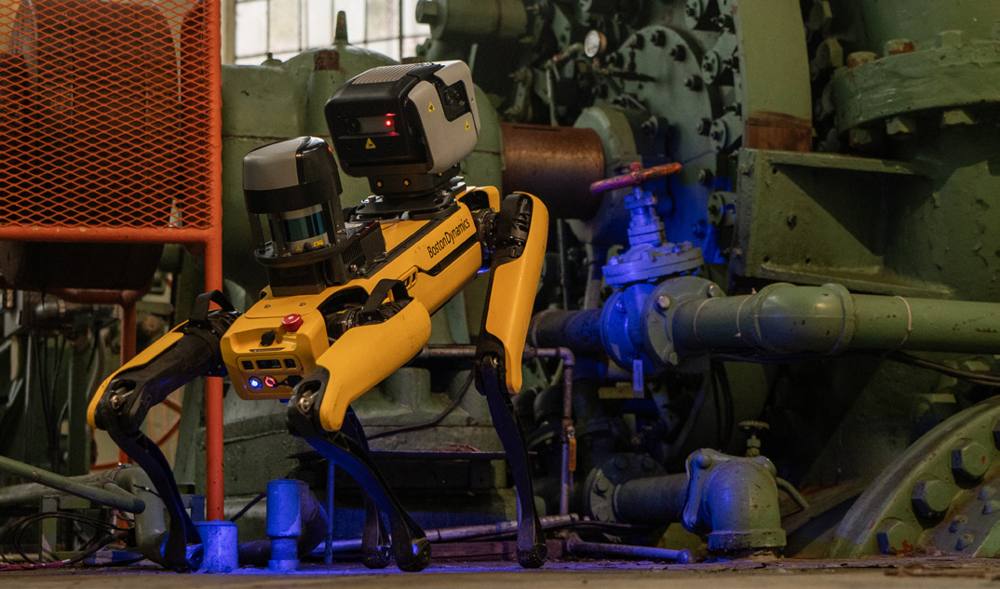
AB InBev's brewery in Leuven, Belgium, the largest in Europe, had approximately 2,500 fixed sensors installed and needed more coverage. The cost of further sensors and their software fees fell outside the business case, so the site added Spot with a thermal camera and an acoustic sensor.
Spot inspects motors, pumps, compressors, gearboxes and conveyor belts along ten packaging lines and conducts 1,800 inspections per week. The team reports more than double the anomalies it expected, most of them compressed air leaks in the first six months. AB InBev estimates that the robot paid for itself within its first year.
What this means for a site program. Leuven runs both layers, continuous sensors and a mobile robot. The combined program gains further value when both layers share one asset model, so that a sensor alarm sends the robot to the asset and the robot's finding is filed on the same record.
Figures as published in Boston Dynamics, "The ROI of Mobile IoT," white paper, 2024, with the original source it names.
A site survey assigns every asset class to the method that fits its failure behavior, and IoT-LogIQ holds the result in one asset model. The table shows a typical assignment, to be confirmed for each site.
| Asset or condition | Continuous sensors on IoT-LogIQ | Spot | Technician |
|---|---|---|---|
| Critical rotating equipment that can fail quickly: drive motors, pumps, compressors, fans | Vibration, ultrasound, temperature and current, reported around the clock | Thermal and acoustic confirmation when the sensor alarms | Planned repair with the diagnosis and images in hand |
| Slow-to-fail equipment: boilers, heat exchangers, gearboxes | Temperature or pressure where a process limit applies | Scheduled thermal and visual rounds, weekly or as the site sets | Follow-up on a confirmed trend |
| Compressed air and gas distribution | Header pressure and flow | Acoustic imaging along the pipe route to locate leaks | Repair from a located, photographed finding |
| Electrical supply, VFDs and internal pressures | Current clamps, pressure transmitters and a Modbus bridge to VFD and PLC registers | Thermal imaging of panel and cabinet exteriors | Contact measurements with handheld instruments |
| Analog gauges and sight glasses on uninstrumented assets | A sensor is added where a reading becomes critical | Gauge reading on every walk | Calibration and replacement |
| Doors, hatches and confined-space covers | Door and hatch contacts | Verification and photograph on route or on dispatch | Closure and corrective action |
| Gas hazards and worker emergencies | Fixed gas detectors (H2S, LEL, O2) and WorkerIQ badges | First entry with video and gas readings | Response with a view of the scene |
| Assets, tools and stock | AssetIQ tags and trackers | Patrol with video when a tag leaves its zone | Custody and inventory decisions |
Assignment logic follows Boston Dynamics' guidance: fixed sensors for machinery that requires 24/7 monitoring and for contact measurements, mobile robots for frequent, repeatable inspections across a wide range of assets, and periodic spot checks for slow-to-fail equipment.
The integration runs on Boston Dynamics' published Orbit interfaces. IoT-LogIQ receives Spot's inspection events through signed Orbit webhooks, dispatches missions through the Orbit web API, and answers Spot's in-mission network callbacks with live readings from the asset it is standing in front of.
Orbit pushes inspection results by HTTP POST to registered webhooks, each request signed with an HMAC-SHA256 secret. IoT-LogIQ verifies the signature and files every capture against the asset it belongs to.
The Orbit web API lets IoT-LogIQ create calendar events that play a mission and dispatch generated missions to a robot, so an alarm on an asset can send Spot to that asset on its own.
Spot missions support network request callbacks. At an inspection point Spot can ask IoT-LogIQ for the live sensor values and thresholds of that asset and adjust what it captures.
Technical basis: Boston Dynamics Spot SDK documentation — About Orbit, Orbit API, Orbit webhook integrations, bosdyn-orbit client, mission network request callbacks.
Each use case pairs a trigger from the sensor layer with an action by Spot and a result delivered to the people and systems responsible.
 SmartPlant · Equipment healthLeak detection
 Security
 FacilitiesIQ · Safety
 WorkerIQ · Emergencies
 AssetIQ · Asset lifecycle
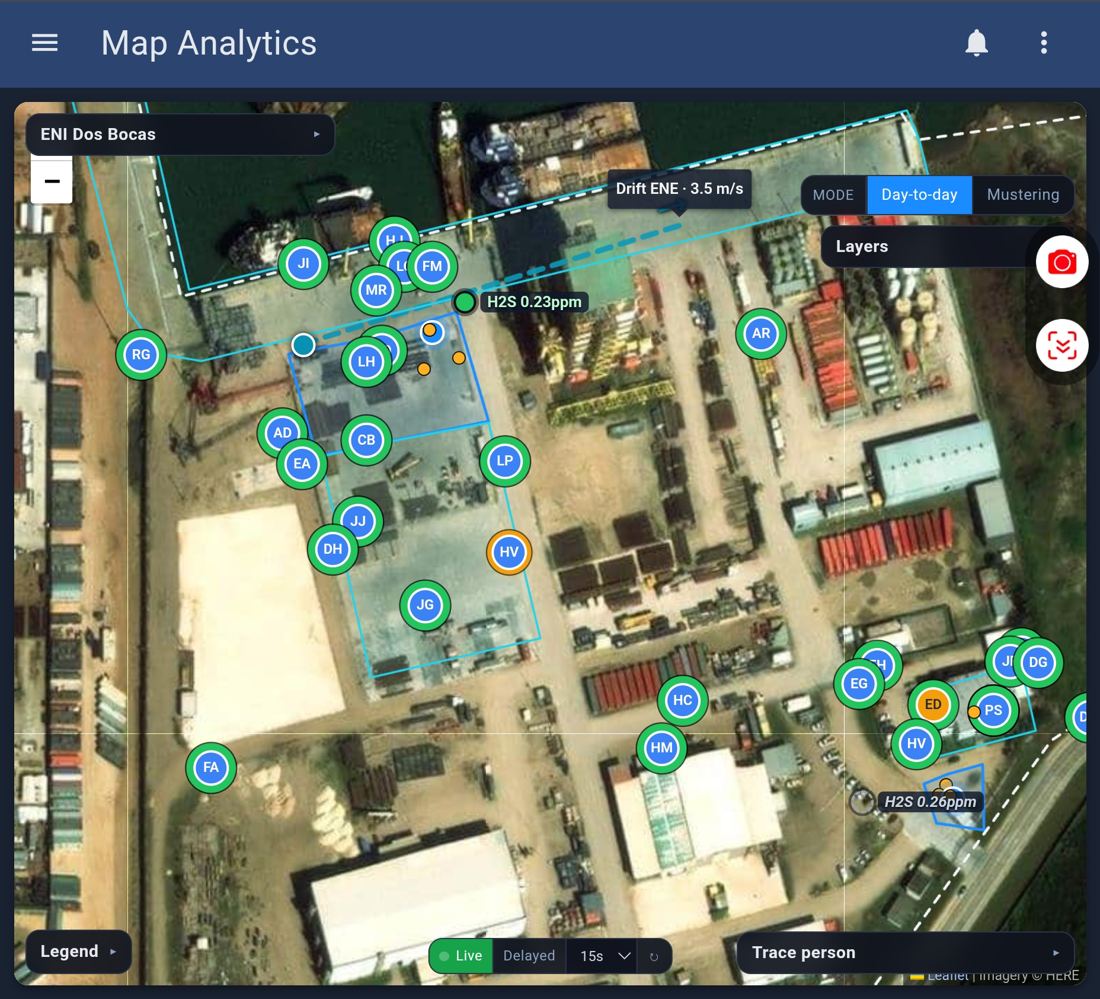
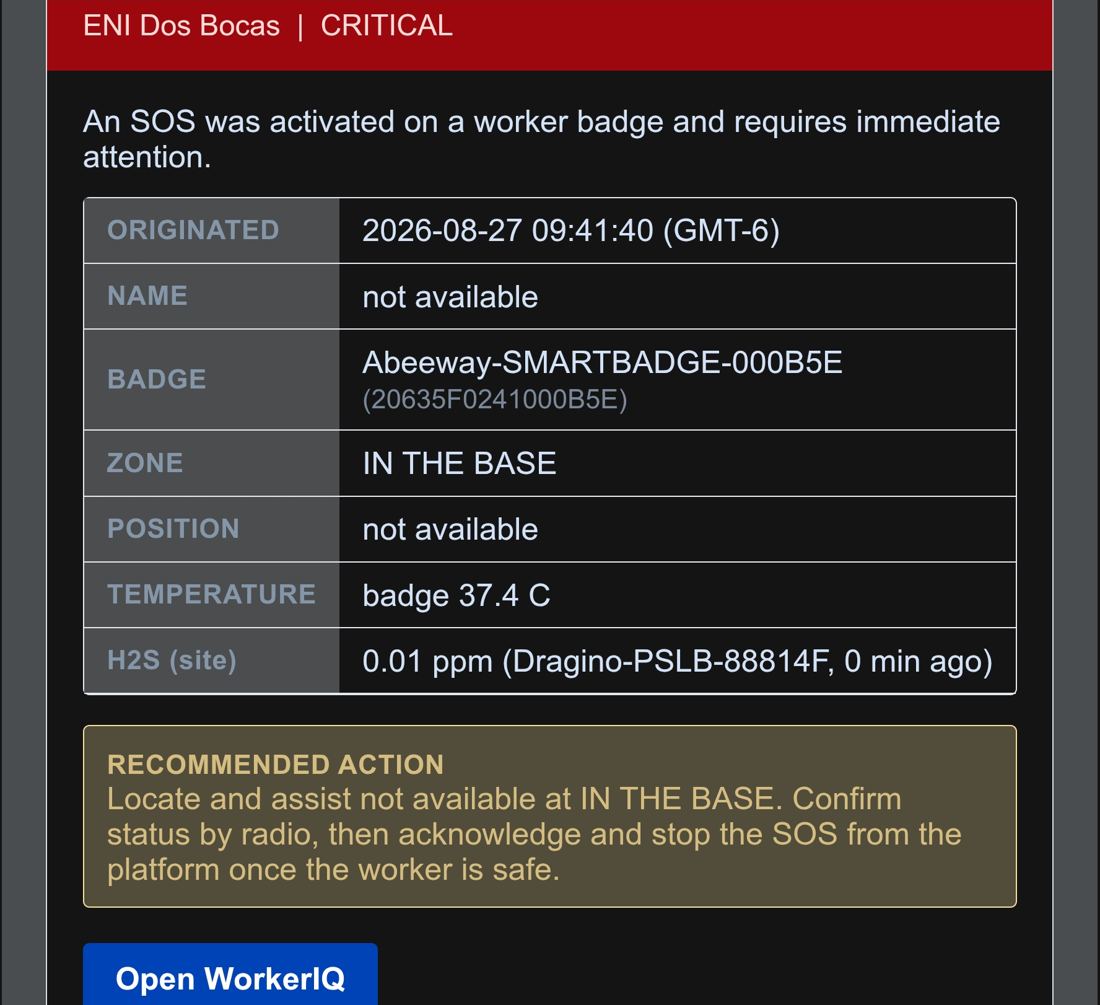
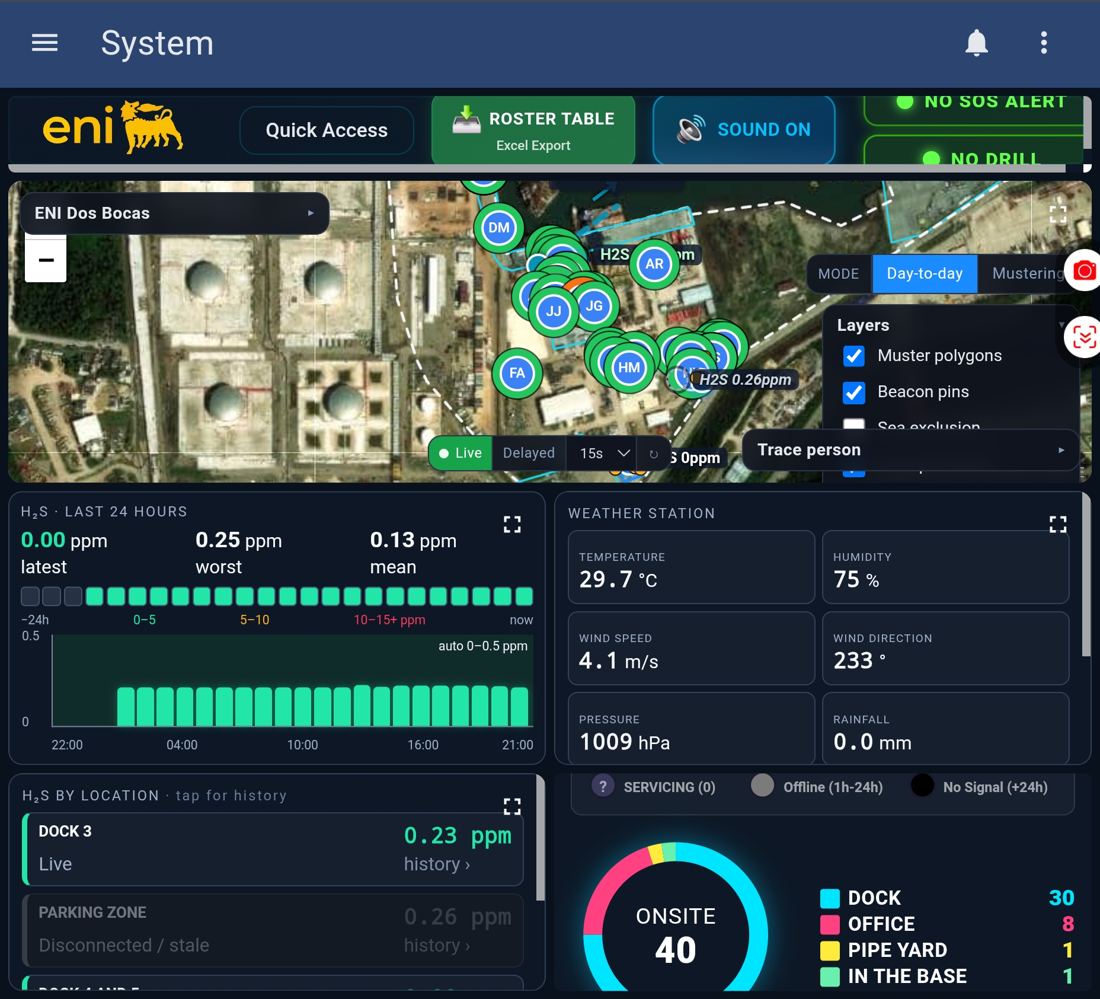
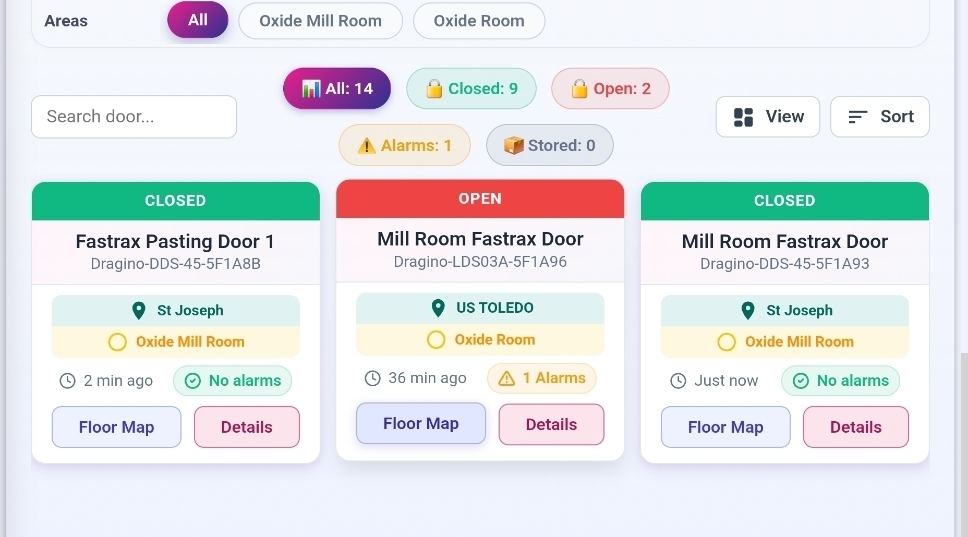
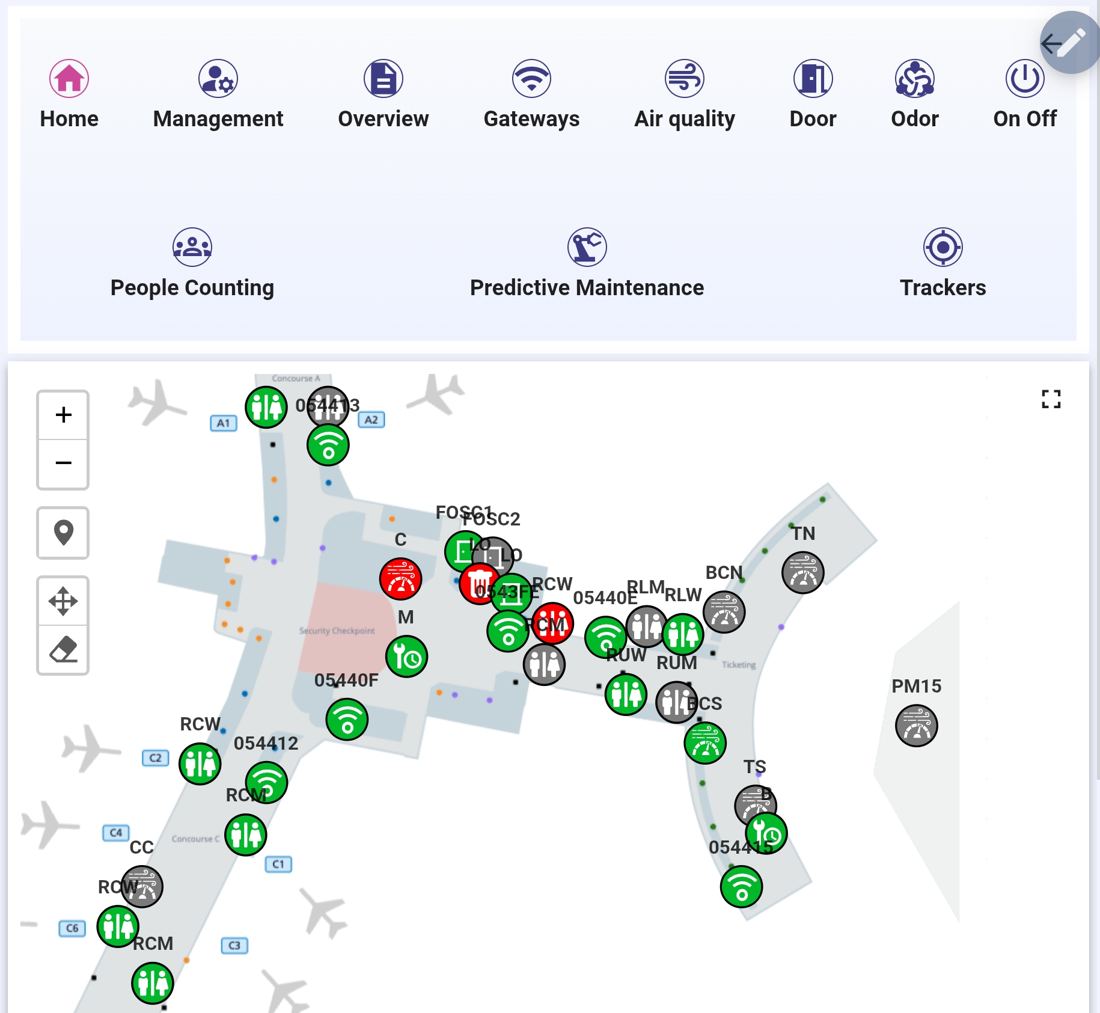
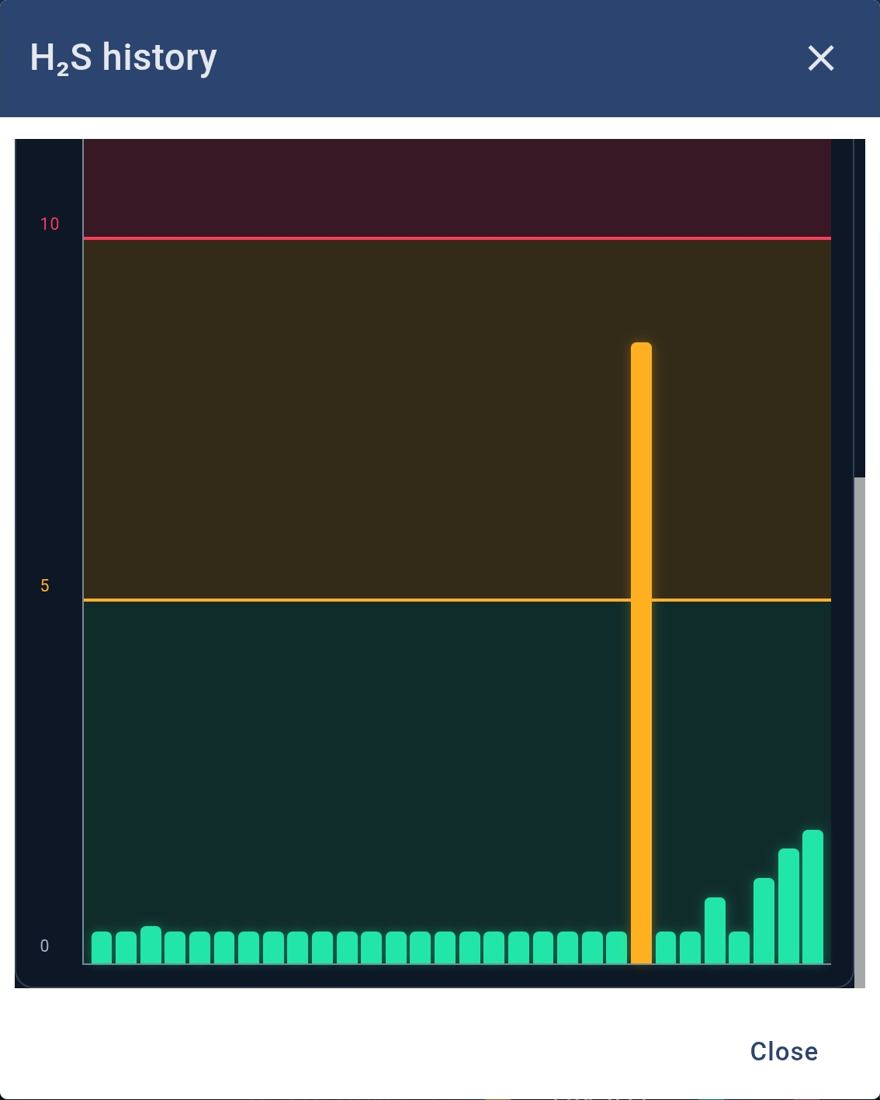
Operators work from one view: the site hierarchy, the alarm that triggered the mission, Spot's progress, the evidence it captured and the sensor trend on the same asset. Select an alarm to see its mission.
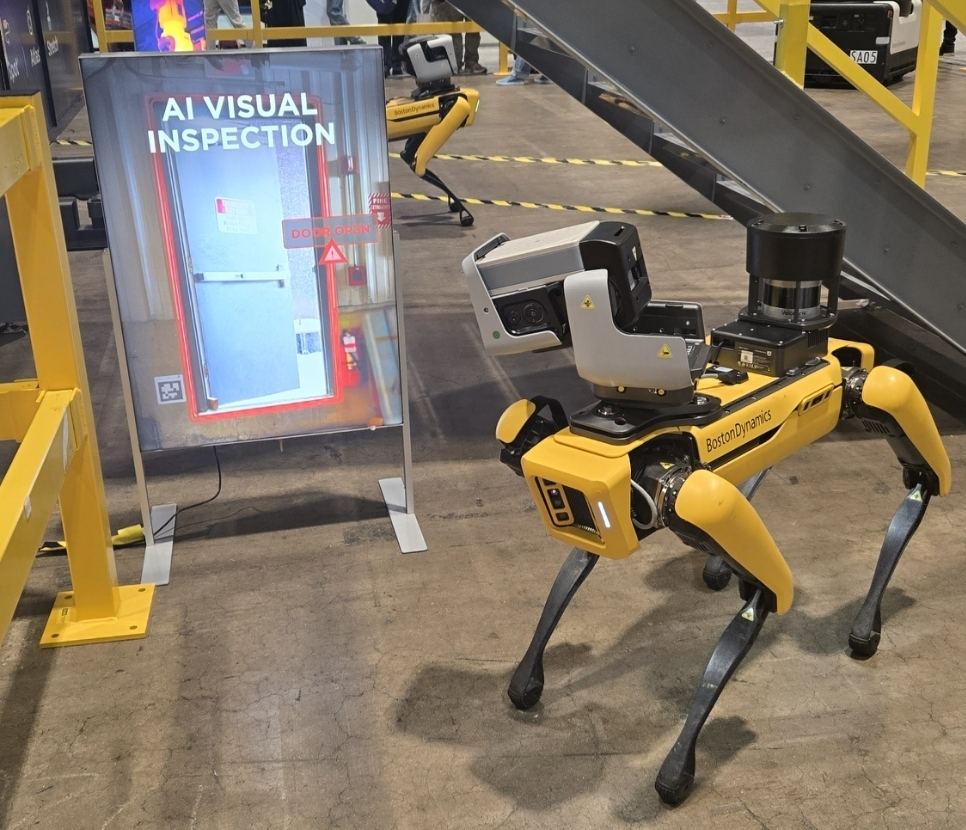
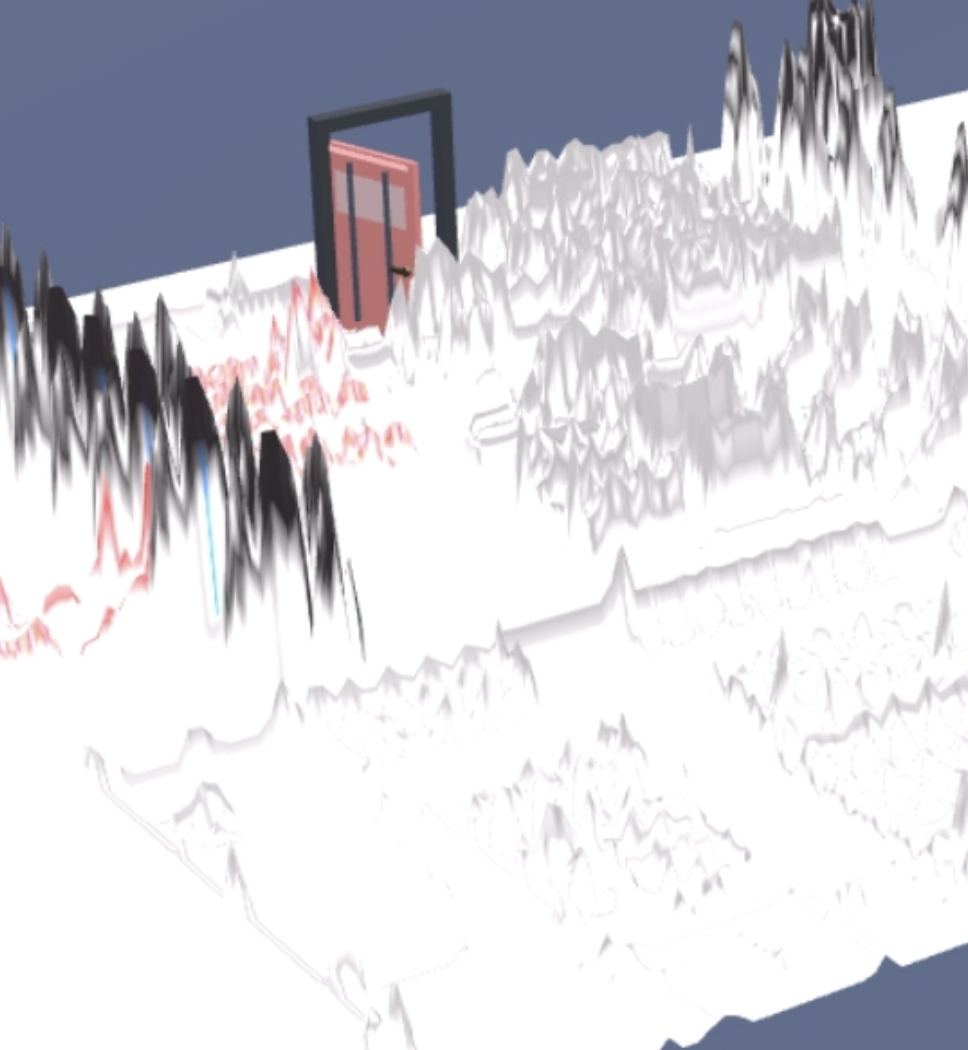
The screens below are from IoT-LogIQ deployments in production. The Spot photographs show door detection during an AI visual inspection demonstration, the same event IoT-LogIQ door sensors report and route today.
A site program combines one Spot with Senzary's IoT-LogIQ scope. Adjust the inputs to the site's own figures; the defaults below are example inputs.
Four hours per day corresponds to the example in the Boston Dynamics white paper of two employees each doing two hour-long rounds daily.
Published reference: AB InBev estimates that Spot paid for itself within its first year at the Leuven brewery (Boston Dynamics, "The ROI of Mobile IoT," 2024).
Our customer footprint is expanding steadily because the platform delivers clear operational ROI. We are active in production across 180+ Fortune 500 facilities in 12+ countries. Industry giants like AES, P&G, and Clarios didn't just buy our platform—they aggressively expanded their footprints post-deployment after seeing real-world gains.
The whitepaper sets out the business case, the site design method and the integration in ten pages. The brochure gives the program at a glance in two.