
01
Sell and install the hardware
Earn margin and labor on every sensor and gateway you put in. Each install takes minutes, not a day on site.
For plumbing, HVAC & building service pros
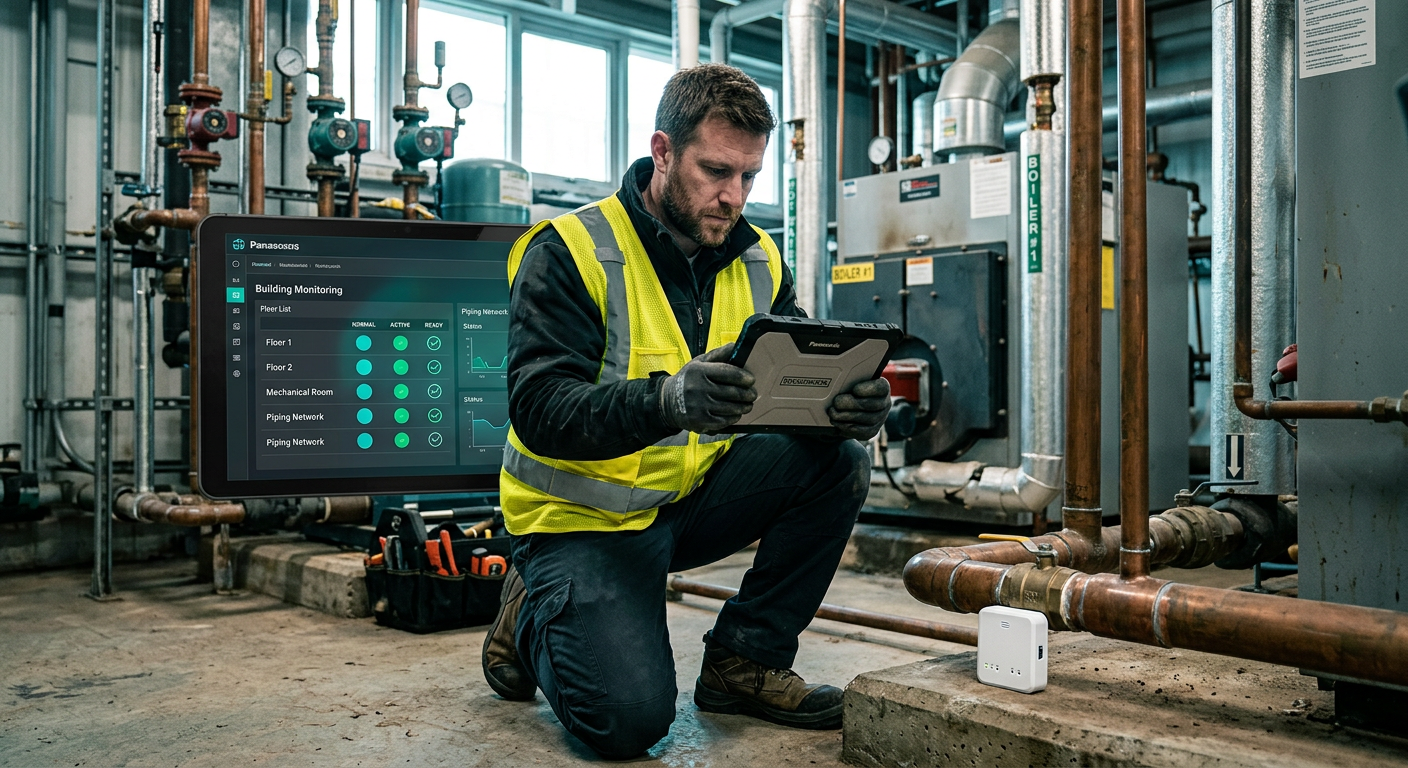
Install wireless leak sensors, monitor them from one dashboard, and bill your customers every month. When water shows up, your team gets the alert and the repair job.
Three ways to get paid
Earn margin and labor on every sensor and gateway you put in. Each install takes minutes, not a day on site.
Charge each building a monthly monitoring fee. Recurring revenue that grows with every site you add.
Alerts go to your team, not a competitor. You arrive while the leak is small and own the fix.
Revenue calculator
Move the sliders to match your customers and your prices. The defaults are example assumptions, not guarantees.
Estimated first-year revenue
$33,360
200 sensors across 20 buildings
Recurring every year after install
$18,360
How it works
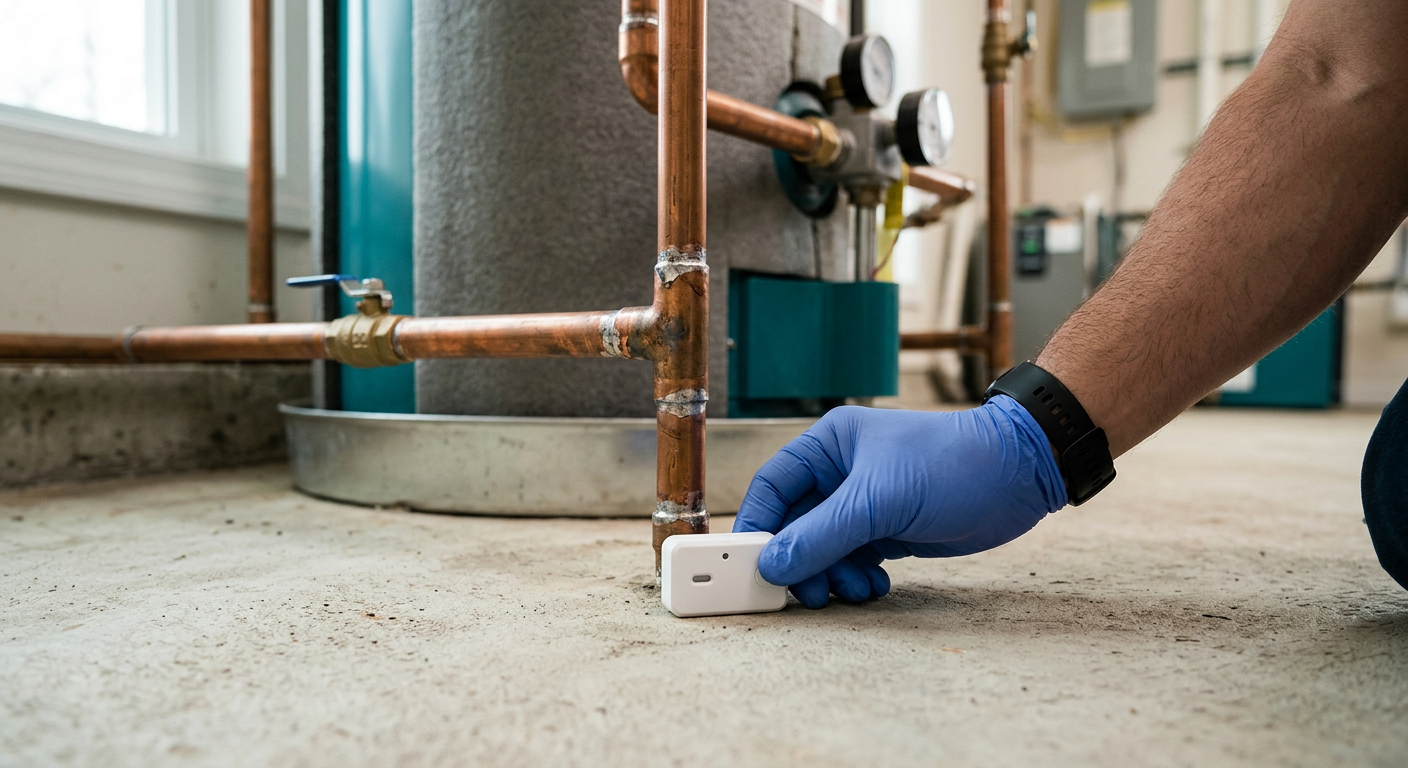
Battery-powered sensors go under water heaters, sinks, risers and HVAC drip pans. No wiring, no electrician.
A LoRaWAN gateway links the building's sensors. Signals reach through walls and floors to mechanical rooms.
See all your buildings, sensor status and battery levels in one Smart Leak dashboard.
When a sensor detects water, your team gets the alert and rolls before the damage spreads.
Live demo
This is the real Smart Leak app running on live sensors. Click around: alerts, buildings and device health are what you resell under your service plans.
The dashboard your team uses to manage sites, sensors and alerts.
Shop the starter kit
Leak and freeze sensors your techs can place in minutes, plus one indoor gateway per building. Order a pilot kit straight from the Senzary shop.

Milesight
Milesight Spot Leak Detection Sensor
Spot probe for mechanical rooms, water heaters and HVAC drip pans.

Milesight
Milesight Mini Leak Sensor WS303
Compact sensor for under sinks, appliances and unit kitchens.

Dragino
Dragino Rope Water Leak Sensor
Sensing rope along walls, risers and equipment rooms.

Dragino
Dragino LHT65N Temp & Humidity Sensor (US915)
Freeze and humidity watch for pipes, crawl spaces and plant rooms.
Built for the trades
Get the call before the ceiling comes down.
Watch drip pans, condensate lines and boiler rooms.
Add monitoring to the buildings you already maintain.
One dashboard across your whole portfolio.
Questions
No. The sensors are battery-powered LoRaWAN devices. Your techs place them where water shows up first and they start reporting through the building gateway.
Any building you already service: multifamily, offices, hotels, schools, retail and light industrial. Anywhere a hidden leak turns into an emergency call.
When a sensor detects water, the alert goes to your team. You get to the building first, fix the cause, and the customer sees you as the reason the damage stayed small.
The calculator lets you model your own install and monitoring prices. Partner hardware pricing and program terms are shared when you talk to our team.
Email our sales team or order a few sensors for a pilot building. We will help you set up the gateway and your first sites in the dashboard.
Campus360 brings leak, HVAC, energy and environmental monitoring together for multi-building portfolios.
Start with one pilot building. We help you set up the gateway, the sensors and your dashboard.

